

From Vision to Impact | Inside the conversation on women’s leadership in medicine | co-hosted by the Lynn Sage Breast Cancer Foundation & WIM
On August 20, Impact House in Chicago hosted "From Vision to Impact," a panel featuring leaders from the Lynn Sage Breast Cancer Foundation and Women in Medicine®. Moderated by WIM’s ED, Morgan Collier, the conversation centered on the systemic barriers facing women in healthcare leadership and the critical role philanthropy plays in sustaining breast cancer research and clinical care. What emerged was a candid look at why these leaders do this work, the data behind the barriers they're fighting, and what still needs to change.
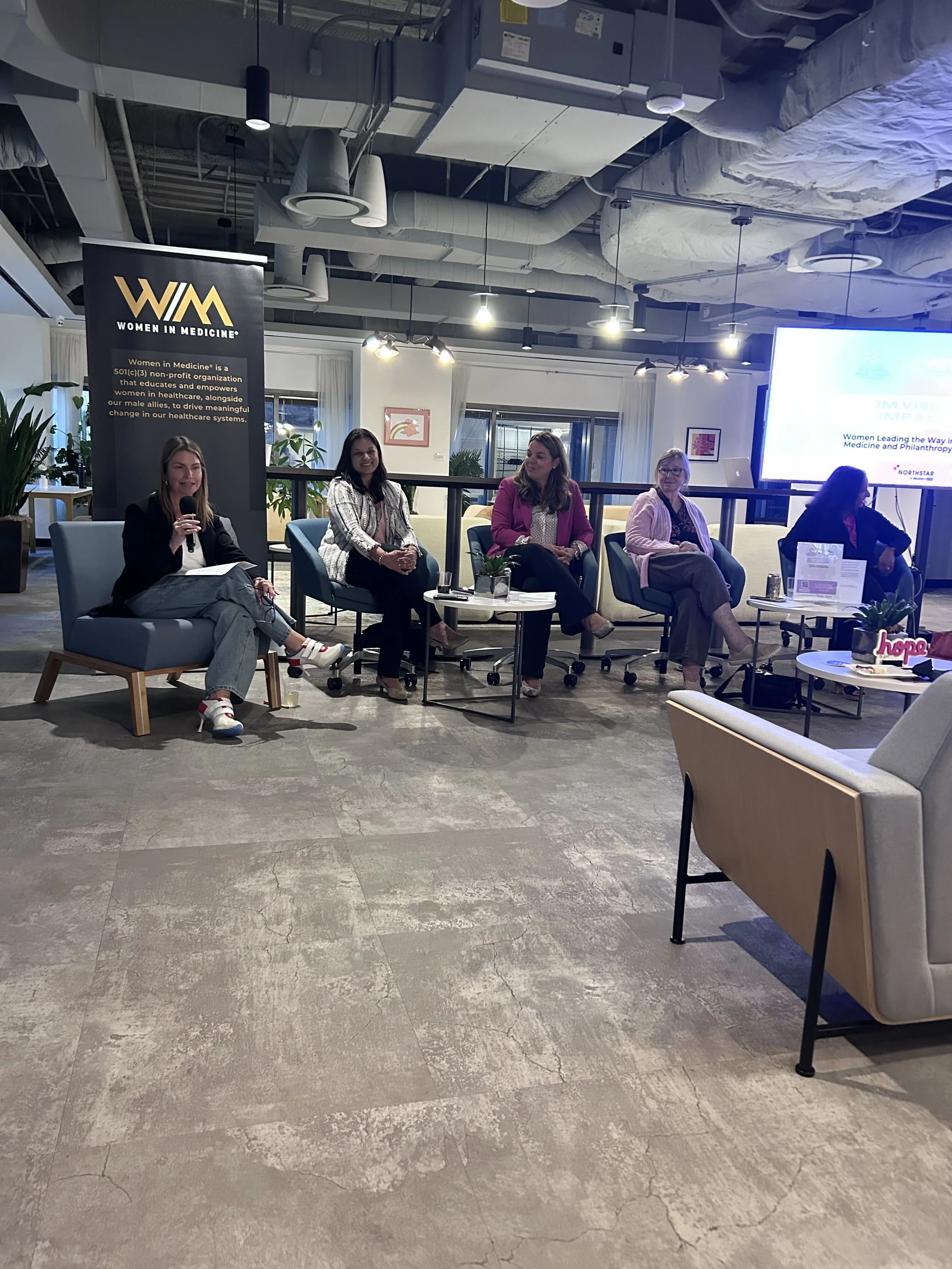
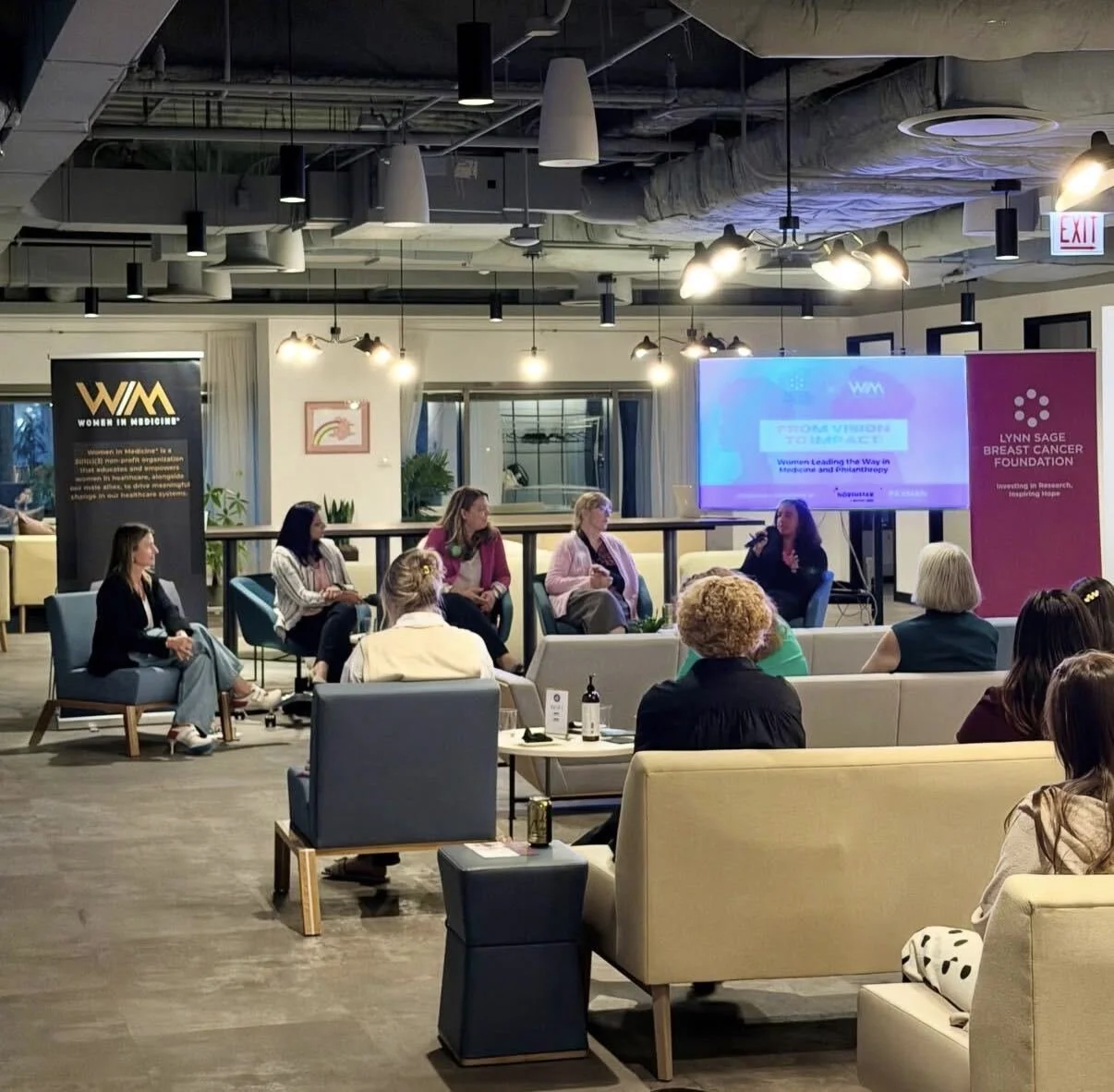
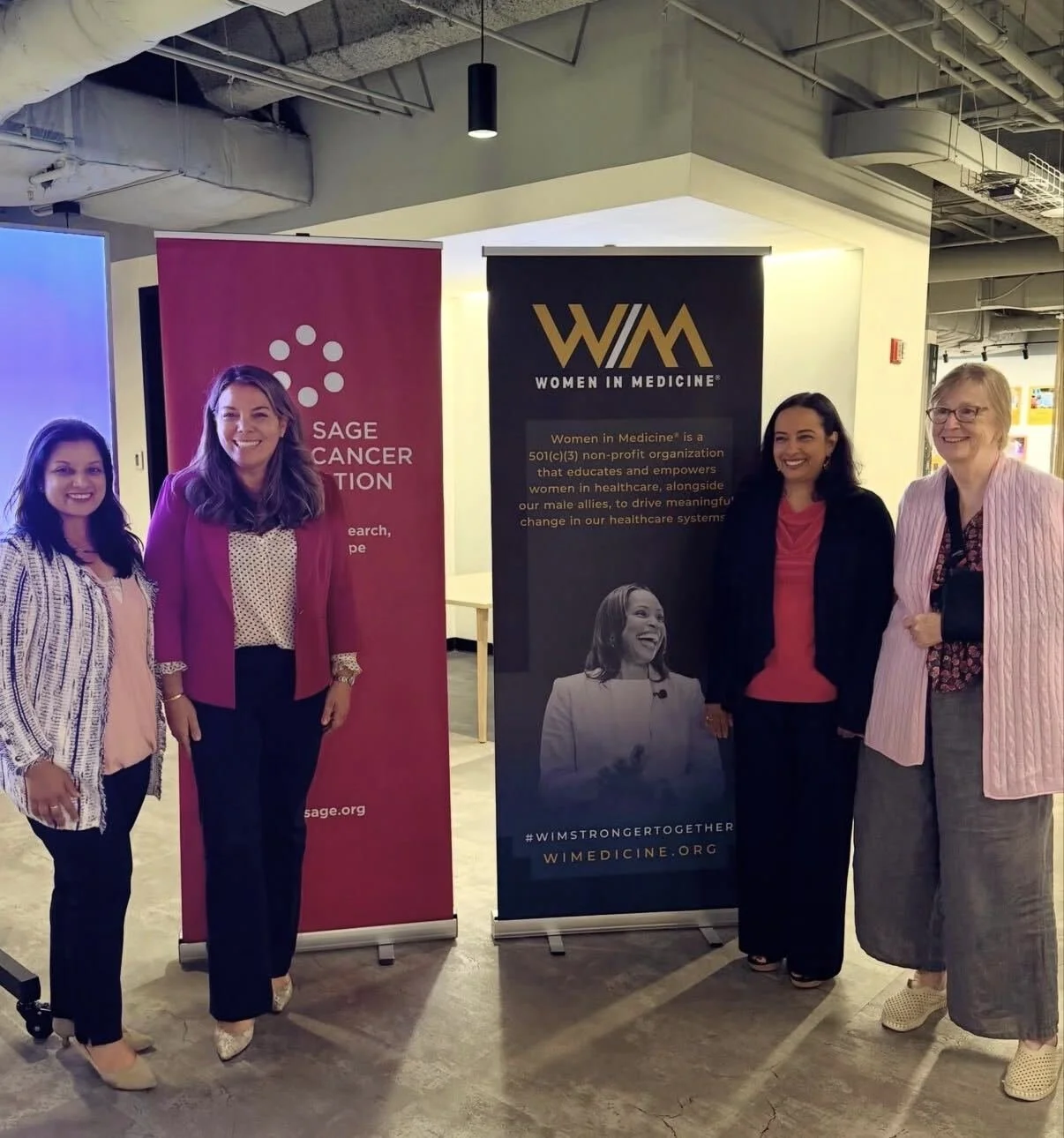
The Stories Behind the Work
For each of the panelists, the commitment to advancing women in medicine isn't abstract. It's personal, often born from loss, observation, or a hard-won understanding of what leadership actually requires.
Dr. Shikha Jain grew up in a physician household, yet it was witnessing profound gender inequities in healthcare firsthand that led her to found WIM. Her goal is simple but ambitious: a sustainable future for healthcare that depends on letting women lead.
Dr. Georgia Spear's path into breast radiology traces back to losing her aunt to breast cancer at just thirty eight. That loss now drives her advocacy for early detection technology and legislative reform.
Dr. Nora Hansen, who pioneered sentinel node technology and built leading breast cancer programs from the ground up, points to something quieter as her motivation: the deep, long term relationships she's built with breast cancer patients over the years.
And Dr. Seema Venkatachalam Malkani - a WIMbassador Thought Leader - pursued medicine specifically to gain the authority needed to influence global health policy. Today, as chair of the Lynn Sage Foundation, she's focused on modeling that leadership for the next generation.
The Numbers Tell an Uncomfortable Story
Women have made up more than half of medical school classes for over a decade now. Yet that parity hasn't translated into leadership. Only 15% of major U.S. health systems are led by female CEOs, and women in senior leadership roles or deanships often represent less than 20%, a figure that drops below 5% for women of color.
The financial toll compounds the leadership gap. Over the course of a career, female physicians earn between two and three million dollars less than their male counterparts. That pay disparity, paired with being repeatedly passed over for advancement, is pushing many talented women out of medicine altogether and into industry or tech.
And then there's the invisible labor. Women are frequently the ones "voluntold" to take on emotional support and organizational maintenance work, the glue that holds teams and departments together, yet this labor is rarely recognized in promotion decisions or compensation.
Where the Money Isn't Going
Much of the panel's conversation turned to a hard truth about philanthropy: the United States is an extraordinarily charitable country, but women's health and girls' organizations receive only a fraction of total donations.
What Comes Next
The panel closed not with despair, but with a clear call to action, and specific ways individuals can push the work forward.
At the federal level, the Find It Early Act stands out as critical legislation, one that would guarantee Medicare and insurance coverage for supplemental screening tests beyond mammography, closing a real gap in early detection.
Inside institutions, Dr. Jain and Dr. Malkani urged a shift in how new recruits negotiate their contracts. Given the high rates of infertility among female physicians who delay family planning to build their careers, they emphasized that childcare stipends and fertility funding, including egg freezing, should be part of the conversation from day one rather than an afterthought.
And on the patient side, the Lynn Sage Breast Cancer Consortium has taken a concrete step of its own, establishing a fund specifically to cover childcare costs for patients. It's a small provision with an outsized impact, ensuring that socioeconomic status never becomes the reason a woman can't participate in a life-saving clinical trial.